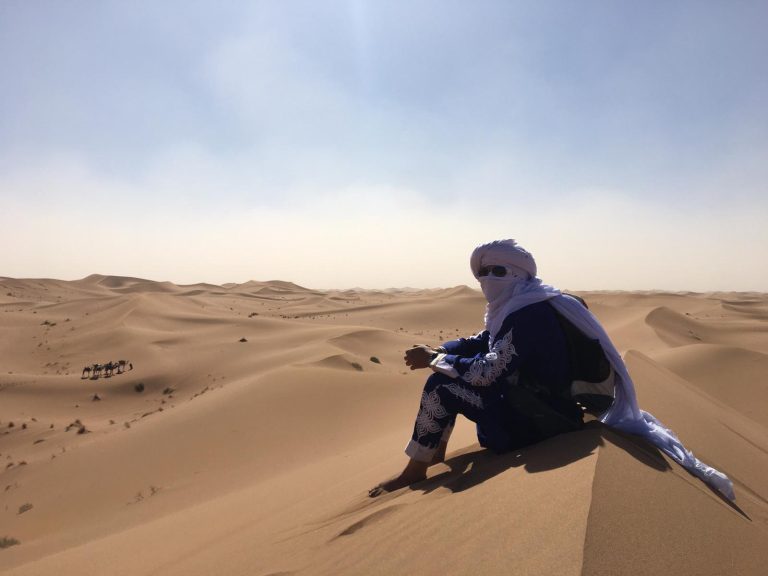
What Do Dromedaries Eat in the Moroccan Sahara?
Dromedaries are one of the most iconic animals of the Moroccan Sahara. But what do they actually eat in such a dry and harsh environment? From thorny desert shrubs to acacia leaves and seasonal grasses, these remarkable animals are perfectly adapted to finding food where very little seems to grow.
What Do Dromedaries Eat?
Dromedaries are herbivores, which means their diet is based entirely on plants. In the Sahara, they feed on whatever vegetation is naturally available, including grasses, leaves, shrubs, dry plants and thorny bushes.
One of the most impressive things about dromedaries is their ability to eat plants that many other animals would avoid. Their thick and resistant lips allow them to browse thorny vegetation without being easily injured.
Typical food for dromedaries includes:
- Desert grasses
- Acacia leaves
- Thorny shrubs
- Dry desert plants
- Salt-tolerant vegetation
- Seasonal plants after rainfall
- Small branches and leaves
How Can Dromedaries Eat Thorny Plants?
Dromedaries have highly adapted mouths. Their lips are thick, flexible and tough, helping them select leaves and branches from thorny desert plants.
This adaptation is extremely useful in the Moroccan Sahara, where soft green vegetation can be scarce and many of the available plants are dry, fibrous or covered with thorns.
Do Dromedaries Eat Cactus?
Dromedaries can eat some tough and thorny plants, including certain cactus-like vegetation where it is available. However, cactus is not normally the main part of their diet in the Moroccan desert.
What they eat depends on the season, rainfall and the type of vegetation found in each region.
What Do Nomads Feed Their Dromedaries?
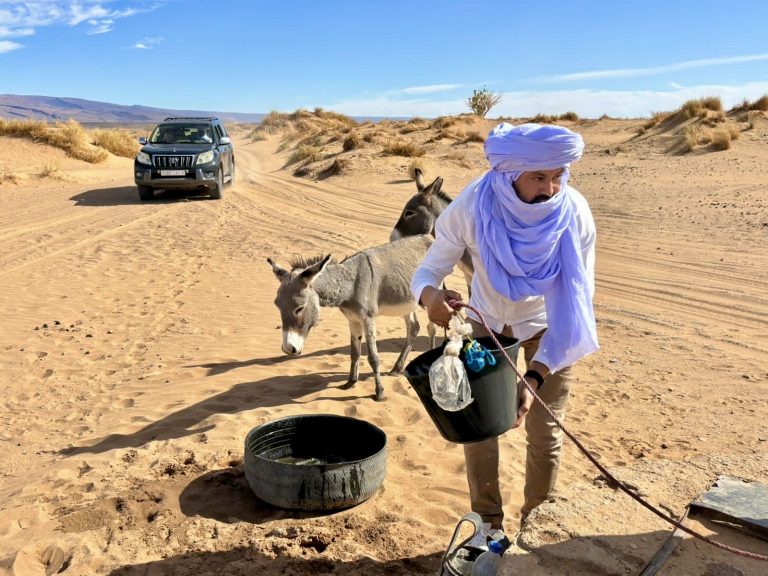
In many parts of southern Morocco, dromedaries belonging to nomadic families spend much of the day grazing naturally across large desert areas.
When natural vegetation becomes scarce, especially during long dry periods, owners may supplement their diet with feed such as barley, hay, straw or other available fodder.
For generations, nomadic families have developed an extraordinary knowledge of the desert, including where to find grazing areas, water and seasonal vegetation for their animals.
Do Dromedaries Store Water in Their Humps?
No. This is one of the most common myths about dromedaries. Their hump does not store water.
The hump mainly stores fat, which acts as an important energy reserve when food is difficult to find.
Their ability to survive for long periods with limited water comes from several physiological adaptations that help their bodies conserve water extremely efficiently.
How Are Dromedaries Adapted to the Sahara?
The dromedary is one of the animals best adapted to desert life. Everything from its body shape to its feeding habits helps it survive in hot and dry environments.
Broad Feet
Their wide feet help distribute their weight over soft sand.
Long Legs
Their long legs keep much of their body away from the hottest ground.
Protective Eyes
Long eyelashes help protect their eyes from sand and dust.
Closable Nostrils
Their nostrils can help reduce the amount of sand entering the nose.
Dromedaries and Nomadic Life in Morocco
Dromedaries have played an essential role in Saharan life for centuries. Long before modern roads and vehicles, they transported people, food and merchandise across the great trans-Saharan caravan routes.
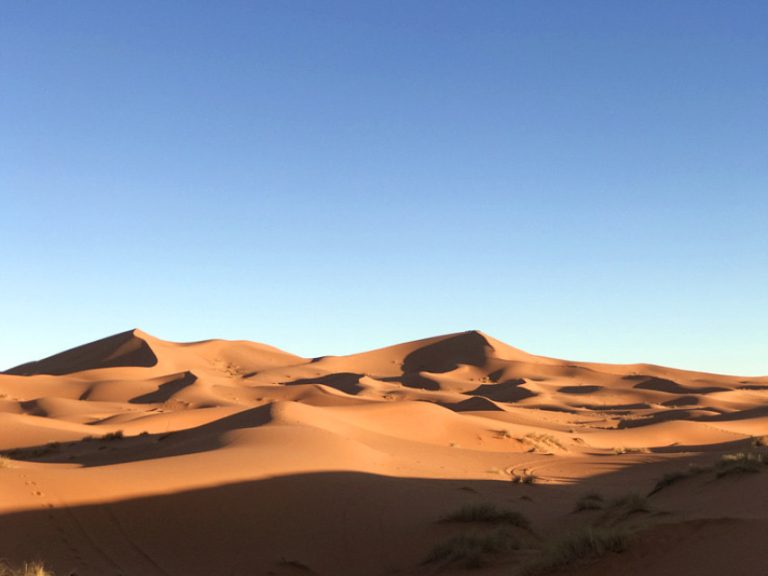
Today, they remain an important part of desert culture in southern Morocco, particularly around regions such as the Draa Valley, M’Hamid and Erg Chegaga.
During a journey through these remote areas, it is still possible to see dromedaries grazing naturally around acacia trees and desert vegetation, far away from the usual tourist camel rides.
Experience Dromedary Life in the Moroccan Desert
Our private Sahara tours take you beyond the standard tourist routes, allowing you to discover remote desert landscapes, nomadic culture and the traditional way of life around Erg Chegaga.
Discover Our Erg Chegaga TourFrequently Asked Questions About Dromedaries
What do dromedaries eat in the desert?
Dromedaries mainly eat grasses, leaves, thorny shrubs, dry plants, acacia vegetation and other plants that grow naturally in arid regions.
Can dromedaries eat thorny plants?
Yes. Their thick and resistant lips allow them to eat many thorny plants that other animals would find difficult to consume.
Do dromedaries store water in their hump?
No. The hump primarily stores fat, which can be used as an energy reserve when food is scarce.
What do nomads feed their dromedaries?
Nomadic dromedaries often graze naturally, but their diet may be supplemented with barley, hay, straw or other fodder when necessary.
Where can you see dromedaries in Morocco?
Dromedaries are common in southern Morocco, especially around desert regions such as the Draa Valley, M’Hamid, Erg Chegaga and other areas of the Moroccan Sahara.